Showing posts with label Machine Learning. Show all posts

Tuesday, 14 June 2016

After all, it might not matter - A commentary on the status of .NET


Did you know what was the most menacing nightmare for a peasant soldier in Medieval wars? Approaching of a knight.

Approaching of a knight - a peasant soldier's nightmare [image source]

Famous for gallantry and bravery, armed to the teeth and having many years of training and battle experience, knights were the ultimate war machine for the better part of Medieval times. The likelihood of survival for a peasant soldier in an encounter with a knight was very small. They should somehow deflect or evade the attack of the knight’s sword or lance meanwhile wielding a heavy sword bring about the injury exactly at the right time when the knight passes. Not many peasant had the right training or prowess to do so.


Appearing around 1000 AD, the dominance of knights started following the conquest of William of Normandy in 11th century and reached it heights in 14th century:
“When the 14th century began, knights were as convinced as they had always been that they were the topmost warriors in the world, that they were invincible against other soldiers and were destined to remain so forever… To battle and win renown against other knights was regarded as the supreme knightly occupation” [Knights and the Age of Chivalry,1974]
And then something happened. Something that changed the military combat for the centuries to come: the projectile weapons.
“During the fifteenth century the knight was more and more often confronted by disciplined and better equipped professional soldiers who were armed with a variety of weapons capable of piercing and crushing the best products of the armourer’s workshop: the Swiss with their halberds, the English with their bills and long-bows, the French with their glaives and the Flemings with their hand guns” [Arms and Armor of the Medieval Knight: An Illustrated History of Weaponry in the Middle Ages, 1988]
The development of longsword had provided more effectiveness for the knight attack but there was no degree of training or improved plate armour could stop the rise of the projectile weapons:
“Armorers could certainly have made the breastplates thick enough to withstand arrows and bolts from longbows and crossbows, but the knights could not have carried such a weight around all day in the summer time without dying of heat stroke.”
And the final blow was the handguns:
“The use of hand guns provided the final factor in the inevitable process which would render armor obsolete” [Arms and Armor of the Medieval Knight: An Illustrated History of Weaponry in the Middle Ages, 1988]
And with the advent of arbalests, importance of lifelong training disappeared since “an inexperienced arbalestier could use one to kill a knight who had a lifetime of training”

Projectile weapons [image source]

Over the course of the century, knighthood gradually disappeared from the face of the earth.

A paradigm shift. A disruption.

*       *       *

After the big promise of web 1.0 was not delivered resulting in the .com crash of 2000-2001, development of robust RPC technologies combined with better languages and tooling gradually rose to fulfill the same promise in web 2.0. On the enterprise front, the need for reducing cost by automating business process lead to the growth of IT departments in virtually any company that could have a chance to survive in the 2000s decade.

In the small-to-medium enterprises, the solutions almost invariably involved some form of a database in the backend, storing CRUD operations performed on data entry forms. The need for reporting on those databases resulted in creating business Intelligence functions employing more and more SQL experts.

With the rise of e-Commerce, there was a need for most companies to have online presence and and ability to offer some form of shopping experience online. On the other hand, to reduce cost of postage and paper, companies started having account management online.

Whether SOA or not, these systems functioned pretty well for the limited functionality they were offering. The important skills the developers of these systems needed to have was good command of the language used, object-oriented coding design principles (e.g. SOLID, etc), TDD and also knowledge of the agile principles and process. In terms of scalability and performance, these systems were rarely, if ever, pressed hard enough to break - even with sticky sessions could work as long as you had enough number of servers (it was often said “we are not Google or Facebook”). Obviously availability suffered but downtime was something businesses had used to and it was accepted as the general failure of IT.

True, some of these systems were actually “lifted and shifted” to the cloud, but in reality not much had changed from the naive solutions of the early 2000s. And I call these systems The Simpleton Swamps.

Did you see what was lacking in all of above? Distributed Computing.

*       *       *

It is a fair question that we need to ask ourselves: what was it that we, as the .NET community, were doing during the last 10 years of innovations? The first wave of innovations was the introduction of revolutionary papers of on BigTable and Dynamo Which later resulted in the emergence of NoSQL movement with Apache Cassandra, Riak and Redis (and later Elasticsearch). [During this time I guess we were busy with WPF and Silverlight. Where are they now?]

The second wave was the Big Data revolution with Apache Hadoop ecosystem (HDFS, Pig, Hive, Mahout, Flume, HBase). [I guess we were doing Windows Phone development building Metro UI back then. Where are they now?]

The third wave started with Kafka (and streaming solutions that followed), Grid Computing platforms with YARN and Mesos and also the extended Big Data family such as Spark, Storm, Impala, Drill, too many to name. In the meantime, Machine Learning became mainstream and the success of Deep Learning brought yet another dimension to the industry. [I guess we were rebuilding our web stack with Katana project. Where is it now?]

And finally we have the Docker family and extended Grid Computing (registry, discovery and orchestration) software such as DCOS, Kubernetes, Marathon, Consul, etcd… Also the logging/monitoring stacks such as Kibana, Grafana, InfluxDB, etc which had started along the way as an essential ingredient of any such serious venture. The point is neither the creators nor the consumers of these frameworks could do any of this without in-depth knowledge of Distributed Computing. These platforms are not built to shield you from it, but to merely empower you to make the right decisions without having to implement a consensus algorithm from scratch or dealing with the subtleties of building a gossip protocol.


And what was it that we have been doing recently? Well I guess we were rebuilding our stacks again with the #vNext aka #DNX aka #aspnetcore. Where are they now? Well actually a release is coming soon: 27th of June to be exact. But anyone who has been following the events closely knows that due to recent changes in direction, we are still - give or take - 9 to18 months far from a stable platform that can be built upon.

So a big storm of paradigm shifts swept the whole industry and we have been still tinkering with our simpleton swamps. Please just have a look at this big list, only a single one of them is C#: Greg Young’s EventStore. And by looking at the list you see the same pattern, same shifts in focus.

.NET ecosystem is dangerously oblivious to distributed computing. True we have recent exceptions such as Akka.net (a JVM port) or Orleans but it has not really penetrated and infused the ecosystem. If all we want to do is to simply build the front-end APIs (akin to nodejs) or cross-platform native apps (using Xamarin studio) is not a problem. But if we are not supposed to build the sizeable chunk of backend services, let’s make it clear here.

*       *       *

Actually there is fair amount of distributed computing happening in .NET. Over the last 7 years Microsoft has built significant numbers of services that are out to compete with the big list mentioned above: Azure Table Storage (arguably a BigTable implementation), Azure Blob Storage (Amazon Dynamo?) and EventHub (rubbing shoulder with Kafka). Also highly-available RDBM database (SQL Azure), Message Broker (Azure Service Bus) and a consensus implementation (Service Fabric). There is a plenty of Machine Learning as well, and although slowly, Microsoft is picking up on Grid Computing - alliance with Mesosphere and DCOS offering on Azure.

But none of these have been open sourced. True, Amazon does not Open Source its bread-and-butter cloud. But considering AWS has mainly been an IaaS offering while Azure is banking on its PaaS capabilities, making Distributed Computing easy for its predominantly .NET consumers. It feels that Microsoft is saying, you know, let me deal with the really hard stuff, but for sure, I will leave a button in Visual Studio so you could deploy it to Azure.


At points it feels as if, Microsoft as the Lords of the .NET stack fiefdom, having discovered gunpowder, are charging us knights and peasant soldiers to attack with our lances, axes and swords while keeping the gunpowder weapons and its science safely locked for the protection of the castle. .NET community is to a degree contributing to the #dotnetcore while also waiting for the Silver Bullet that #dotnetcore has been promised to be, revolutionising and disrupting the entire stack. But ask yourself, when was the last time that better abstractions and tooling brought about disruption? The knight is dead, gunpowder has changed the horizon yet there seems to be no ears to hear.

Fiefdom of .NET stack
We cannot fault any business entity for keeping its trade secrets. But if the soldiers fall, ultimately the castle will fall too.

In fact, a single company is not able to pull the weight of re-inventing the emerging innovations. While the quantity of technologies emerged from Azure is astounding, quality has not always followed exactly. After complaining to Microsoft on the performance of Azure Table Storage, others finding it too and sometimes abandon the Azure ship completely.


No single company is big enough to do it all by itself. Not even Microsoft.

*       *       *

I remember when we used to make fun of Java and Java developers (uninspiring, slow, eclipse was nightmare). They actually built most of the innovations of the last decade, from Hadoop to Elasticsearch to Storm to Kafka... In fact, looking at the top 100 Java repositories on github (minus Android Java), you find 24 distributed computing projects, 4 machine library repos and 2 languages. On C# you get only 3 with claims to distributed computing: ServiceStack, Orleans and Akka.NET.

But maybe it is fine, we have our jobs and we focus on solving different kinds of problems? Errrm... let's look at some data.

Market share of IIS web server has been halved over the last 6 years - according multiple independent sources [This source confirms the share was >20% in 2010].

IIS share of the market has almost halved in the last 6 years [source]

Now the market share of C# ASP.NET developers are decreasing to half too from tops of 4%:

Job trend for C# ASP.NET developer [source]
And if you do not believe that, see another comparison with other stacks from another source:

Comparing trend of C# (dark blue) and ASP.NET (red) jobs with that of Python (yellow), Scala (green) and nodejs (blue). C# and ASP.NET dropping while the rest growing [source]

OK, that was actually nothing, what I care more is OSS. Open Source revolution in .NET which had a steady growing pace since 2008-2009, almost reached a peak in 2012 with ASP.NET Web API excitement and then grew with a slower pace (almost plateau, visible on 4M chart - see appendix). [by the way, I have had my share of these repos. 7 of those are mine]

OSS C# project creation in Github over the last 6 years (10 stars or more). Growth slowed since 2012 and there is a marked drop after March 2015 probably due to "vNext". [Source of the data: Github]

What is worse is that the data showing with the announcement of #vNext aka #DNX aka #dotnetcore there was a sharp decline in the new OSS C# projects - the community is in a limbo situation waiting for the release - people find it pointless to create OSS projects on the current platform and the future platform is so much in flux which is not stable enough for innovation. With the recent changes announced, practically it will take another 12-18 months for it to stabilise (some might argue 6-12 months, fair enough, take what you like). For me this is the most alarming of all.

So all is lost?

All is never lost. You still find good COBOL or FoxPro developers and since it is a niche market, they are usually paid very well. But the danger is losing relevance…

Practically can Microsoft pull it off? Perhaps. I do not believe it is hopeless, I feel a radical change by taking the steps below, Microsoft could materially reverse the decay:
  1. Your best community brains in the Distributed Computing and Machine Learning are in the F# community, they have already built many OSS projects on both - sadly remaining obscure and used by only few. Support and promote F# not just as a first class language but as THE preferred language of .NET stack (and by the way, wherever I said .NET stack, I meant C# and VB). Ask everyone to gradually move. I don’t know why you have not done it. I think someone somewhere in Redmond does not like it and he/she is your biggest enemy.
  2. Open Source good part of distributed services of Azure. Let the community help you to improve it. Believe me, you are behind the state of the art, frankly no one will look to copy it. Someone will copy from Azure Table Storage and not Cassandra?!
  3. Stop promoting deployment to Azure from Visual Studio with a click of a button making Distributed Computing looking trivial. Tell them the truth, tell them it is hard, tell them so few do succeed hence they need to go back and study, and forever forget about one-button click stuff. You are not doing a favour to them nor to yourself. No one should be acknowledged to deploy anything in distributed fashion without sound knowledge of Distributed Computing. 

Last word

So when I am asked about whether I am optimistic about the future of .NET or on the progress of dotnetcore, I usually keep silent: we seem to be missing the point on where we need to go with .NET - a paradigm shift has been ignored by our ecosystem. True dotnetcore will be released on 27th but  after all, it might not matter as much as we so much care about. One of the reasons we are losing to other stacks is that we are losing our relevance. We do not have all the time in the world. Time is short...

Appendix

Github Data

Gathering the data from github is possible but due to search results being limited to 1000to rate-limiting, it takes a while to process. The best approach I found was to list repos by update date and keep moving up. I used a python script to gather the data.

It is sensible to use the number of stars as the bar for the quality and importance of Github projects. But choosing the threshold is not easy and also there is usually a lag between creation of a project and it to gain popularity. That is why the threshold has been chosen very low. But if you think the drop in creation of C# projects in Github was due to this lag, think again. Here is the chart of all C# projects regardless of their stars (0 stars and more):


All C# projects in github (0 stars and more) - marked drop in early 2015 and beyond

F# showing healthy growth but the number of projects and stars are much less than that of C#. Hence here we look at the projects with 3 stars and more:


OSS F# projects in Github - 3 stars or more
Projects with 0 stars and more (possible showing people starting picking up and playing with it) is looking very healthy:


All F# projects regardless of stars - steady rise.


Data is available for download: C# here and F# here

My previous predictions

This is actually my second post of this nature. I wrote one 2.5 years ago, raising alarm bells for the lack of innovation in .NET and predicting 4 things that would happen in 5 years (2.5 years from now):
  1. All Data problems will be Big Data problems
  2. Any server-side code that cannot be horizontally scaled is gonna die
  3. Data locality will still be an issue so technologies closer to data will prevail
  4. We need 10x or 100x more data scientists and AI specialists
Judge for yourself...


Deleted section

For the sake of brevity, I had to delete this section but this puts in context how we have many more hyperscale companies:

"In the 2000s, not many had the problem of scale. We had Google, Yahoo and Amazon, and later Facebook and Twitter. These companies had to solve serious computing problems in terms of scalability and availability that on one hand lead to the Big Data innovations and on the other hand made Grid Computing more accessible.

By commoditising the hardware, the Cloud computing allowed companies to experiment with the scale problems and innovate for achieving high availability. The results have been completely re-platformed enterprises (such as Netflix) and emergence of a new breed of hyperscale startups such as LinkedIn, Spotify, Airbnb, Uber, Gilt and Etsy. Rise of companies building software to solve problems related to these architectures such as Hashicorp, Docker, Mesosphere, etc has added another dimension to all this.

And last but not least, is the importance of close relationship between academia and the industry which seems to be happening after a long (and sad) hiatus. This has lead many academy lecturers acting as Chief Scientists, etc to influence the science underlying the disruptive changes.

There was a paradigm shift here. Did you see it?"

Sunday, 14 June 2015

Five crazy abstractions my Deep Learning word2vec model just did

Seeing is believing. 

Of course, there is a whole host of Machine Learning techniques available, thanks to the researchers, and to Open Source developers for turning them into libraries. And I am not quite a complete stranger to this field, I have been, on and off, working on Machine Learning over the last 8 years. But, nothing, absolutely nothing for me has ever come close to what blew my mind recently with word2vec: so effortless yet you feel like the model knows so much that it has obtained cognitive coherence of the vocabulary. Until neuroscientists nail cognition, I am happy to foolishly take that as some early form of machine cognition.

Singularity Dance - Wiki

But, no, don't take my word for it! If you have a corpus of 100s of thousand documents (or even 10s of thousands), feed it and see it for yourselves. What language? Doesn't really matter! My money is on that you will get results that equally blow your tops off.

What is word2vec?

word2vec is a Deep Learning technique first described by Tomas Mikolov only 2 years ago but due to its simplicity of algorithm and yet surprising robustness of the results, it has been widely implemented and adopted. This technique basically trains a model based on a neighborhood window of words in a corpus and then projects the result onto [an arbitrary number of] n dimensions where each word is a vector in the n dimensional space. Then the words can be compared using the cosine similarity of their vectors. And what is much more interesting is the arithmetics: vectors can be added or subtracted for example vector of Queen is almost equal to King + Woman - Man. In other words, if you remove Man from the King and add Woman to it, logically you get Queen and but this model is able to represent it mathematically.

LeCun recently proposed a variant of this approach in which he uses characters and not words. Altogether this is a fast moving space and likely to bring about significant change in the state of the art in Natural Language Processing.

Enough of this, show us ze resultz!

OK, sure. For those interested, I have brought the methods after the results.

1) Human - Animal = Ethics

Yeah, as if it knows! So if you remove the animal traits from human, what remains is Ethics. And in word2vec terms, subtracting the vector of Human by the vector of Animal results in a vector which is closest to Ethics (0.51). The other similar words to the Human - Animal vector are the words below: spirituality,  knowledge and piety. Interesting, huh?

2) Stock Market ≈ Thermometer

In my model the word Thermometer has a similarity of 0.72 to the Stock Market vector and the 6th similar word to it - most of closer words were other names for the stock market. It is not 100% clear to me how it was able to make such abstraction but perhaps proximity of Thermometer to the words increase/decrease or up/down, etc could have resulted in the similarity. In any case, likening Stock Market to Thermometer is a higher level abstraction.

3) Library - Books = Hall

What remains of a library if you were to remove the books? word2vec to the rescue. The similarity is 0.49 and next words are: Building and Dorm.  Hall's vector is already similar to that of Library (so the subtraction's effect could be incidental) but Building and Dorm are not. Now Library - Book (and not Books) is closest to Dorm with 0.51 similarity.

4) Obama + Russia - USA = Putin

This is a classic case similar to King+Woman-Man but it was interesting to see that it works. In fact finding leaders of most countries was successful using this method. For example, Obama + Britain - USA finds David Cameron (0.71).

5) Iraq - Violence = Jordan

So a country that is most similar to Iraq after taking its violence is Jordan, its neighbour. Iraq's vector itself is most similar to that of Syria - for obvious reasons. After Jordan, next vectors are Lebanon, Oman and Turkey.

Not enough? Hmm there you go with another two...

Bonus) President - Power = Prime Minister

Kinda obvious, isn't it? But of course we know it depends which one is Putin which one is Medvedev :)

Bonus 2) Politics - Lies = Germans??

OK, I admit I don't know what this one really means but according to my model, German politicians do not lie!

Now the boring stuff...

Methods

I used a corpus of publicly available online news and articles. Articles extracted from a number of different Farsi online websites and on average they contained ~ 8KB of text. The topics ranged from local and global Politics, Sports, Arts and Culture, Science and Technologies, Humanities and Religion, Health, etc.

The processing pipeline is illustrated below:

Figure 1 - Processing Pipeline
For word segmentation, an approach was used to join named entities using a dictionary of ~ 40K multi-part words and named entities.

Gensim's word2vec implementation was used to train the model. The default n=100 and window=5 worked very well but to find the optimum values, another study needs to be conducted.

In order to generate the results presented in this post, most_similar method was used. No significant difference between using most_similar and most_similar_cosmul was found.

A significant problem was discovered where words with spelling mistake in the corpus or infrequent words generate sparse vectors which result in a very high score of similar with some words. I used frequency of the word in the corpus to filter out such occasions.

Conclusion

word2vec is relatively simple algorithm with surprisingly remarkable performance. Its implementation are available in a variety of Open Source libraries, including Python's Gensim. Based on the preliminary results, it appears that word2vec is able to make higher levels abstractions which nudges towards cognitive abilities.

Despite its remarkable it is not quite clear how this ability can be used in an application, although in its current form, it can be readily used in finding antonym/synonym, spelling correction and stemming.

Sunday, 10 May 2015

Machine Learning and APIs: introducing Mills in REST API Design

Level [C3]

REST (REpresentational State Transfer) was designed with the "state" at its heart, literally, standing for the S in the middle of the acronym.

TL;DR: Mill is a special type of resource where server's authority purely comes from exposing an algorithm, rather than "defining, exposing and maintaining integrity of a state". Unlike an RPC style endpoint, it has to adhere to a set of 5 constraints (see below). 

Historically, when there were only a few thousand servers around, the state was predominantly documents. People were creating, editing and sharing a lot of text documents, and some HTML. With HTTP 1.1, caching and concurrency was built into the protocol and enabled it to represent richer distributed computing concerns and we have been building . With the rising popularity of REST over the last 10 years, much of today's web has been built on top of RESTful thinking, whether what is visible or what is behind the presentation (most external layer) servers. Nowadays when we talk of state, we normally mean data or rather records persisted in a data store (relational or non-relational). A lot of today's data, directly or indirectly, is created, updated and deleted using REST APIs. And this is all cool, of course.

When we design APIs, we map the state into REST Resources. It is very intuitive to think of resources as collection and instance. It is unambiguous and useful to communicate these concepts when for example we refer to /books and /books/123 URLs, as the collection or instance resources, respectively. We interact with these resources using verbs, and although HTTP verbs are not meant to be used just for CRUD operations, interacting with the state that exists on the server is inherent in the design.

But that is not all the story. Mainstream adoption of Machine Learning in the industry means we need to expose Machine Learning applications using APIs. The problem is the resource oriented approach of REST (where the state is at the heart of the design) does not work very well.

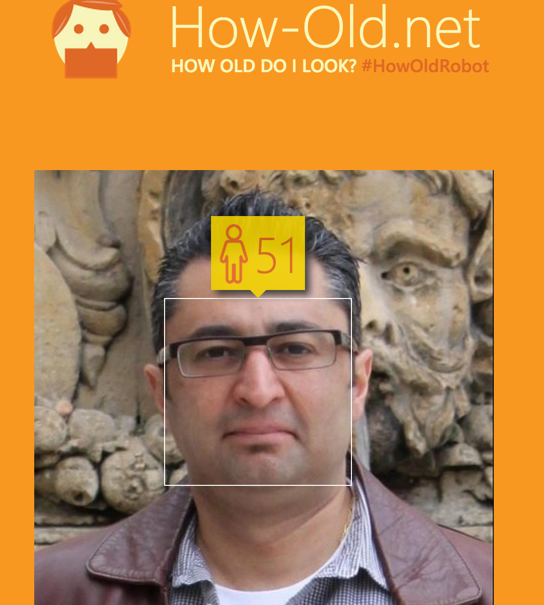
By the way, I am NOT 51...
How-old.net is an example of a Machine Learning application where instead of being an application, it could have been an API. For example (just for illustration, you could use other media types too):

POST /age_gender_classifier HTTP/1.1
Content-Type: image/jpeg
And the response:
200 OK
Content-Type: application/json

{
    "gender":"M"
    "age":37
}

Server is generating a response to the request by carrying out complex face recognition and running a model, most likely a deep network model. Server is not returning a state stored on the server, in fact this whole process is completely stateless.

And why does this matter? Well I feel if REST is supposed to move forward with our needs and use cases, it should define, clarify, internalise and finally digest edge cases. While such edge cases were pretty uncommon, with the rise and popularity of Machine Learning, such endpoints will be pretty standard.

A few days ago, on the second day of APIdays Mediterranea 2015 conference, I presented a talk on Machine Learning and APIs. And in this talk I presented simple concept of Mills. Mills, where you take your wheat to be ground and you carry back the flour.


Basically, it all goes back to the origin of a server's authority. To bring an example, a "Customer Profile" service, exposed by a REST API, is the authority to go to when another service requires access to a customer's profile. The "Customer Profile" service has defined a state, which is profile of the customers, and is responsible for ensuring integrity of the state (enforcing business rules on the state). For example, marketing email preference can have values of None, WeeklyDigest or All, it should not allow the value to be set to MonthlyDigest. We are quite used to these type of services and building REST APIs on top: CustomerProfile becomes a resource that we can query or interact with.

On the other hand, a server's authority could be exposing an algorithm. For example, tokenisation of text is a non-trivial problem that requires not only breaking the text to its words, but also maintaining muti-words and named entities intact. A REST API that exposes this functionality will be a mill.

5 constraints of a Mill

1) It encapsulates an algorithm not a state

Which was discussed ad nauseum, however, the distinction is very important. For example let's say we have an algorithm that you provide the postcode and it returns to you houses within 1 mile radius of that postcode - this is not an example of a mill.

2) Raw data in, processed data out

For example you send your text and get back the translation.

3) Calls are both safe and idempotent

Calling the endpoint should not directly change any state within the server. For example, the endpoint should not be directly mapped to the ML training engine, e.g. sending a text 1000 times skew the trained model for that text. The training endpoint is usually a normal resource, not a mill - see my slides

4) It has a single specialty

And as such, it accepts a single HTTP verb apart from OPTIONS, normally POST (although a GET with entity payload would be more semantically correct but not my preferred option for practical reasons).

5) It is named not as a verb but as a tool

A mill that exposes tokenisation, is to be called tokeniser. In a similar way, classifier would be the appropriate name for a system that classifies on top of a neural network, for example. Or normalising text, would have a normaliser mill.


No this is not the same as an RPC endpoint. No RPC smell. Honest :) That is why those 5 constraints exists.


Thursday, 1 January 2015

Future of Programming - Rise of the Scientific Programmer (and fall of the craftsman)

Level [C3]

[Disclaimer: I am by no means a Scientific Programmer but I am striving to become one] It is the turn of yet another year and the time is ripe for the last year reviews, predictions for the new year and its resolutions. Last year I made some bold statements and made some radical decisions to start transitioning. I picked up a Mac, learnt some Python and Bash and a year on, I think it was good and really enjoyed it. Still (as I predicted), I spent most of my time writing C#. [working on a Reactive Cloud Actor micro-Framework, in case for any reason it interests you]. Now a year on, Microsoft is a different company: new CEO, moving towards Open Source and embracing non-Windows operating systems. So how it is going to shift the innovation imbalance is a wait-and-see. But anyway, that was last year and is behind us.

Now let's talk about 2015. And perhaps programming in general. Are you sick of hearing Big Data buzzwords? Do you believe Data Science is a pile of mumbo jumbo to bamboozle us and actually used by a teeny tiny number of companies, and producing value even less? IoT is just another hype? I hope by reading the below, I would have been able to answer you. Sorry, no TL;DR

*     *     *

It was a warm, sunny and all around really nice day in June. The year is 2007 and I am on a University day trip (and punting) to Cambridge along with my classmates many of whom are at least 15 years younger than me. Punting is fun but as a part time student this is one of the few times I have a leisurely access to our Image Processing lecturer - a bright and young guy - again younger than me. And I open the discussion with how we have not moved much since the 80s in the field of Artificial Intelligence. We improve and optimise algorithms but there is no game-changing giant leap. And he argues the state of the art usually improves little by little.


"Day out punting in cambridge"

Next year, we work on a project involving some machine learning to recognise road markings. I spend a lot of time on feature extraction and use a 2 layer Neural Network since I get the best result out of it compared to 3. I am told not to use many layers of neurons as it usually gets stuck on a local minima during training - I actually tried and saw it. Overall the result was OK but it involved many pre- and post- processing techniques to achieve acceptable recognition.

*     *     *

I wake up and it is 2014. Many Universities, research organisations (and companies) across the world have successfully implemented Deep Learning using Deep Neural Networks - which have many layers of neurons. Watson answers all the questions in Double Jeopardy. Object Recognition from image is almost a solved case - with essentially no feature extraction.

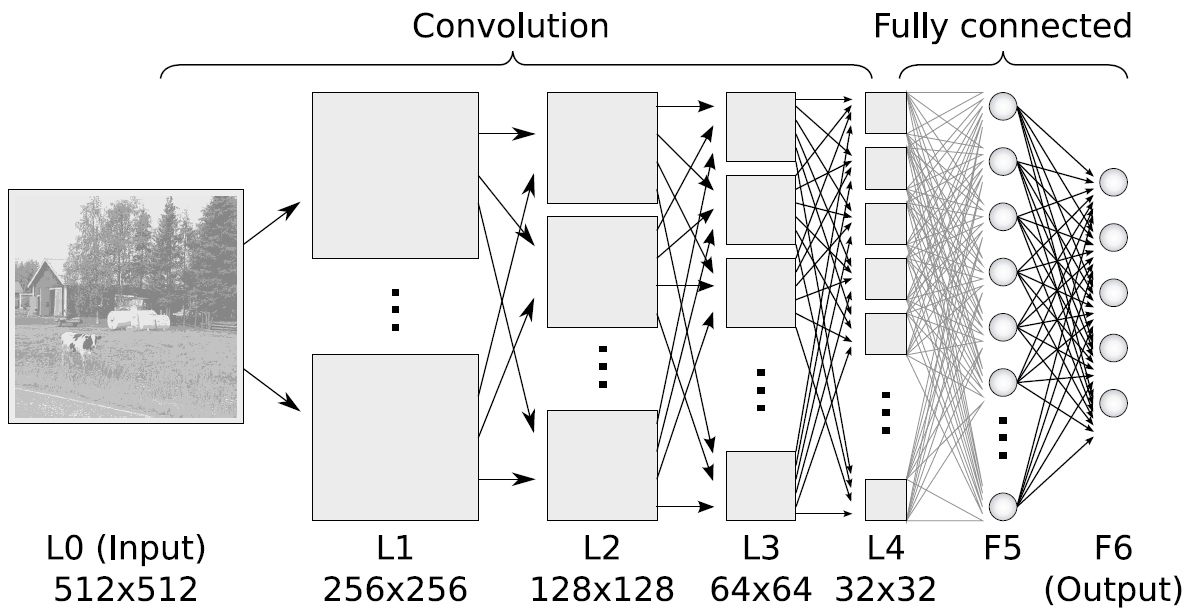
A Deep Neural Network
Perhaps my lecturer was right: with improving training algorithms and providing many many labeled data, we suddenly have a big leap in science (or was I right?!). It seems that for the first time implementation has got ahead of the mathematics: we do not fully understand why Deep Learning works - but it works. And when they fail, we still don't know why they fail.

And guess what, industry and the academia have not been this close for a long time.

And what has all this got to do with us? Rise of the machine intelligence is going to change programming. Forever.

*     *     *

Honestly, I am sick of the amount of bickering and fanboyism that goes today in the programming world. The culture of "nah... I don't like this" or "ahhh... that is s..t" or "ah that is a killer" is what has plagued our community. One day Angular is super hot next week it is the worst thing. Be it zsh or Bash. Be in vim vs. Emacs vs. Sublime Text vs Visual Studio. Be it Ruby, Node.js, Scala, Java, C#, you name it. And same goes for technologies such as MongoDB, Redis... subjectivism instead of facts. As if we forgot we came from the line of scientists.

Like children we get attached to new toys and with the attention span of a goldfish, instead of solving real world problems, ruminate over on how we can improve our coding experience. We are ninjas and what we do no one can do. And we can do whatever we want to do.

"I have got power"

Yes, we are lucky. A 23-year old kid with a couple of years of programming experience can earn double of what a 45-year old retail manager with 20 years of experience earns annually. And what we do with that money? spend all of it on booze, specialty burgers, travelling and conferences, gadgets - basically whatever we want to.

But those who remember the first .com crash, can tell you it has not always been like this. In fact, back in 2001-2002 it was really hard to get a job. And the problem was, there were many really good candidates. IT industry became almost impenetrable since there was this catch-22 of requiring job experience to get the job experience. But anyway, the good ones, the stubborn ones and those with little talent but a lot of passion (includes me) stayed on for the good days that we have now. Reality was many programmers of the time had read "Access in 24 hours" and landed a fat salary in a big company. And on the other hand, projects were failing since we spent most of our time writing documentation. The industry had to weed out bad coders and inefficient practices.

And we have software craftsmanship movement and agile practices.

*     *     *

The opposition has already started. You might have seen discussions DHH has had with Kent Beck and Martin Fowler on TDD. I do not agree 100% with Erik Meijer says here (only 90%) but there is a lot of truth in it. We have replaced fact-based data-backed attitude with a faith-based wishy-washy peace-hug-freedom hippie agile way, forcing us mechanically to follow some steps and believe that it will be good for us. Agile has taken us a long way from where we started at the turn of the century, but there are problems. From personal experience, I see no difference in the quality of developers who do TDD and do not. And to be frank, I actually see negative effect, people who do TDD do not fully think hard about the consequence of the code they write - I know this could be inflammatory but hand on heart, that is my experience.  I think TDD and agile has given us a safety net that as a tightrope walker, instead of focusing on our walking technique, we improve the safety net. As long as we do the motions, we are safe. Unit tests, coverage, planning poker, retrospective, definition of done, Story, task, creating tickets, moving tickets. How many bad programmers have you seen that are masters of agile?

You know what? It is the mediocrity we have been against all the time. Mediocre developers who in the first .com boom got into the market by taking a class or reading a book are back in a different shape: those who know how to be opinionated, look cool, play the game and take the paycheck. We are in another .com boom now, and if there is a crash, sadly they are out - even if it includes me.


*     *     *

I think we have neglected the scientific side of our jobs. Our maths is rusty and those who did study CompSci do not remember a lot of what they read. We cannot calculate the complexity of our code and fall to the trap that machines are fast now - yes it didn't matter for a time but when you are dealing with petabytes of data and pay by processing hours? When our team first started working on recommendations, the naive implementation took 1000 node for 2 days, now the implementation uses 24 nodes for a few hours, and perhaps this is still way way too much.

"we are craftsmen and craftswomen" (from Anders Drachen)


But really, since when did our job look like a craftsman (a carpenter)? We are Ninjas? And we do code Kata to keep our skills/swords sharp. This is all gone too far into the world of fantasy. The world of warcraft. This is now a New Age full-blown religion.

What an utter rubbish.

*     *     *

Now back on earth, languages of the 90s and early 2000 are on the decline. Java, C#, C++ all on the decline. But they are being replaced by other languages such as Scala right? I leave that to you to decide based on the diagram below. 
Google trends of "Java", "Scala", "C#" and "Python Programming" (so that it does not get mixed up with Python the snake) - source: google
The only counter trend is Python. The recent rise in Python popularity is what I call "rise of the scientific programmer" - and that is just one of the signs. Python is a very popular language in the academic space. It is easy to pick up works everywhere and has some functional aspects making it terse. But that is not all: it sits on top of a huge wealth of scientific libraries and it can talk to Java and C as well. Industry innovations have started to come straight from the Universities. From the early 2000s where the academia seemed completely irrelevant to now where it leads the innovation. PySpark has come fully from the heart of Berkeley's University. Many of the contributors to Hadoop code and its wide ecosystem are in the academia.

We are now in need of people who can scientifically argue about algorithms and data (is coding anything but code+data?) and most of them could implement an algorithm given the paper or mathematical notation. And guess what, this is the trend for jobs with "Machine Learning":
Trend of jobs containing "Machine Learning" - Source: ITJobsWatch

And this is really not just Hadoop. According to the source above Machine learning jobs have had 41% rise from 2013 to 2014 while hadoop jobs had only 16%.

This Deep Learning thing is real. It is already here. All those existing algorithms need to be polished and integrated with the new concepts and some will be just replaced. If you can give interactions of a person with a site to a deep network, it can predict with a high confidence whether they are gonna buy, leave or indecisive. It can find patterns in diseases that we as humans cannot. This is what we were waiting for (and we were afraid of?). Machine intelligence is here.

The scientific Programmer [And yes, it has to know more]


Now one might say that the answer is the Data Scientists. True. But first, we don't have enough of them and second, based on first hand experience, we need people with engineering rigour to produce production ready software - something that certainly some Data Scientist have but not all. So I feel that a programmer turned Statistician can build a more robust software than the other way around. We need people who understand what it takes to build a software that you can put in front of millions of customers to use. People who understand linear scalability, SLA, monitoring and architectural constraints.

*     *     *

Horizon is shifting.

We can pick a new language (be it Go, Haskell, Julia, Rust, Elixir or Erlang) and start re-inventing the wheel and start from pretty much the same scratch again because hey, this is easy now, we have done it before and don't have to think. We can pick a new albeit cleaner abstraction and re-implement thousands of hours of hard work and sweat we and the community have suffered - since hey we can. We can rewrite the same HTTP pipeline 1000s of different ways and never be happy with what we have achieved, be it Ruby on Rails, Sinatra, Nancy, ASP.NET Web API, Flask, etc. And keep happy that we are striving for that perfection, that unicorn. We can argue about how to version APIs and how a service is such RESTful and such not RESTful. We can mull over pettiest of things such as semicolon or the gender of a pronoun and let insanely clever people leave our community. We can exchange the worst of words over "females in the industry" while we more or less are saying the same thing, Too much drama.

But soon this will be no good. Not good enough. We got to grow up and go back to school, relearn all about Maths, statistics, and generally scientific reasoning. We need to man up and re-learn that being a good coder has nothing to do with the number of stickers you have at the back of your Mac. It is all scientific - we come from a long line of scientists, we have got to live up to our heritage.

We need to go and build novelties for the second half of the decade. This is what I hope to be able to do.